
1. Overview
Live blood analysis has fascinated researchers, practitioners, and health enthusiasts for decades because it offers a real-time view of blood under a microscope. One of the most discussed concepts in this field is the Life Cycle of Polymorphic Microorganisms, a theory popularized through the work of Dr. Günther Enderlein and later educational materials used in live blood analysis training.
Today, modern technologies such as www.LiveBlood.ai are transforming microscopic blood evaluation by combining advanced imaging with artificial intelligence, helping practitioners document and analyze visible blood patterns more efficiently.
2. What Are Polymorphic Microorganisms?
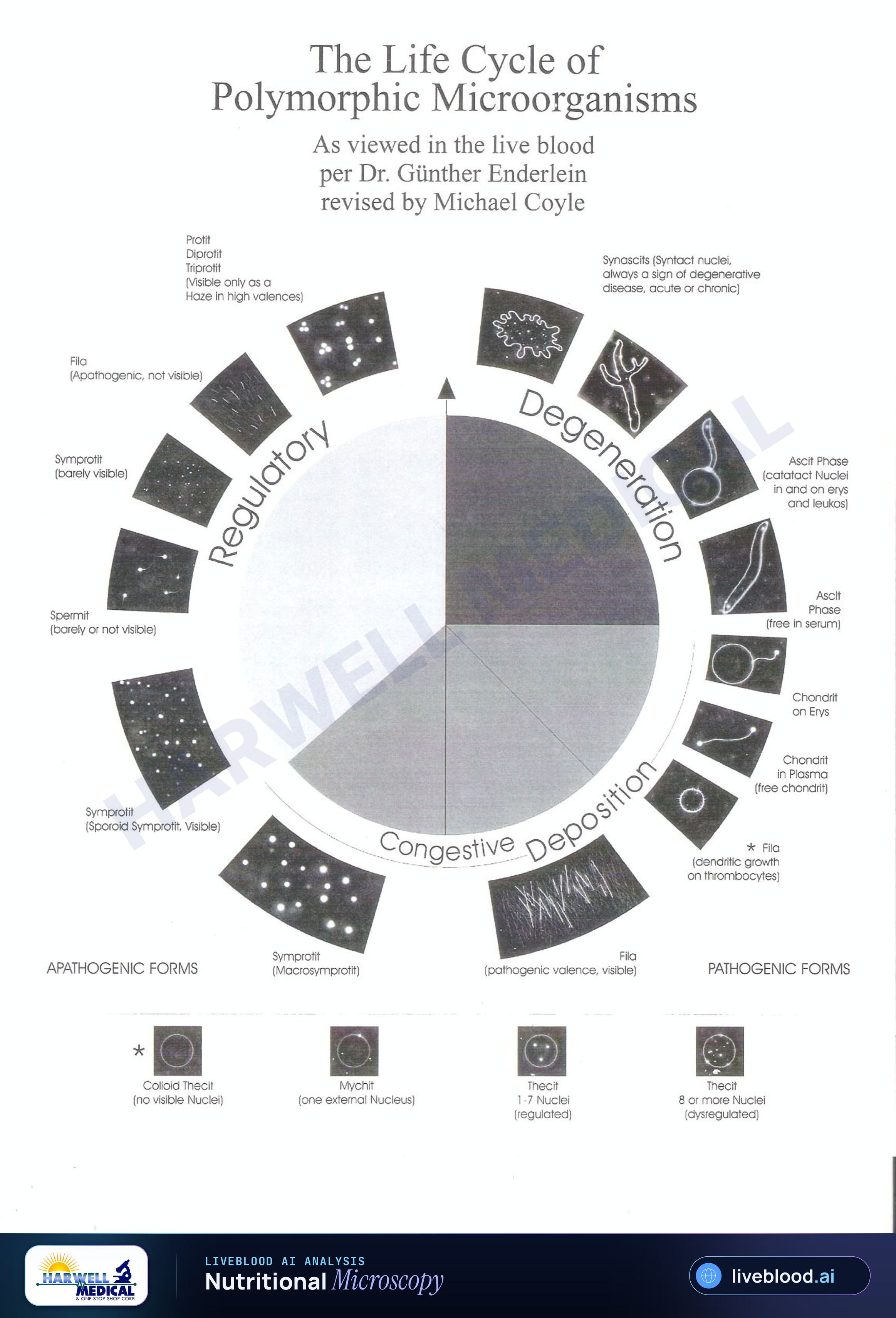
The term polymorphic microorganisms refers to the historical theory that microscopic organisms may appear in different forms or developmental stages depending on their environment and biological conditions.
In the diagram, various stages are illustrated, ranging from smaller, less visible forms to larger structures that appear during different phases of development.
These observations have been part of educational discussions within live blood microscopy for many years and continue to generate interest among practitioners studying blood morphology and cellular environments.
3. The Three Major Phases Observed in the Diagram
The life cycle illustration highlights three broad conditions:
Regulatory Phase
The regulatory phase represents the balance and normal functioning of the biological environment.
Forms identified in this section include:
- Spermit
- Symprotit
- Fila
- Profit
- Diprofit
- Triprotit
These forms are described in historical live blood analysis literature as appearing during a more regulated biological state.
Congestive Deposition Phase
The second phase illustrates what is described as a deposition or congestion stage.
In this stage, visible structural changes appear in the microscopic environment. The diagram suggests an increased presence of larger visible formations and accumulations.
Within live blood analysis, practitioners often associate this phase with the body's response to lifestyle factors such as:
- Poor nutrition
- Environmental stressors
- Dehydration
- Chronic stress
- Lack of exercise
Degeneration Phase
The degeneration phase is shown as the most advanced stage within the cycle.
The diagram depicts larger and more complex structures, including:
- Chondrit forms
- Ascit phases
- Syncasits
Historically, these forms have been interpreted as indicators of biological imbalance within certain live blood analysis methodologies.
4. How Artificial Intelligence Enhances Modern Live Blood Analysis
Traditional live blood analysis has relied heavily on human interpretation. Today, platforms such as LiveBlood.ai leverage artificial intelligence to assist in image assessment and pattern recognition.
5. Benefits of AI-Powered Blood Analysis
Advanced Image Recognition
AI can rapidly evaluate microscopic blood images and detect visible patterns that might otherwise require extensive manual review.
Consistent Analysis
Artificial intelligence applies standardized evaluation criteria, helping improve consistency between assessments.
Faster Reporting
Automated systems generate comprehensive reports in minutes, improving efficiency for practitioners and clients.
Long-Term Monitoring
Digital storage allows users to track changes and compare blood images over time.
6. Blood Morphology and Cellular Observation
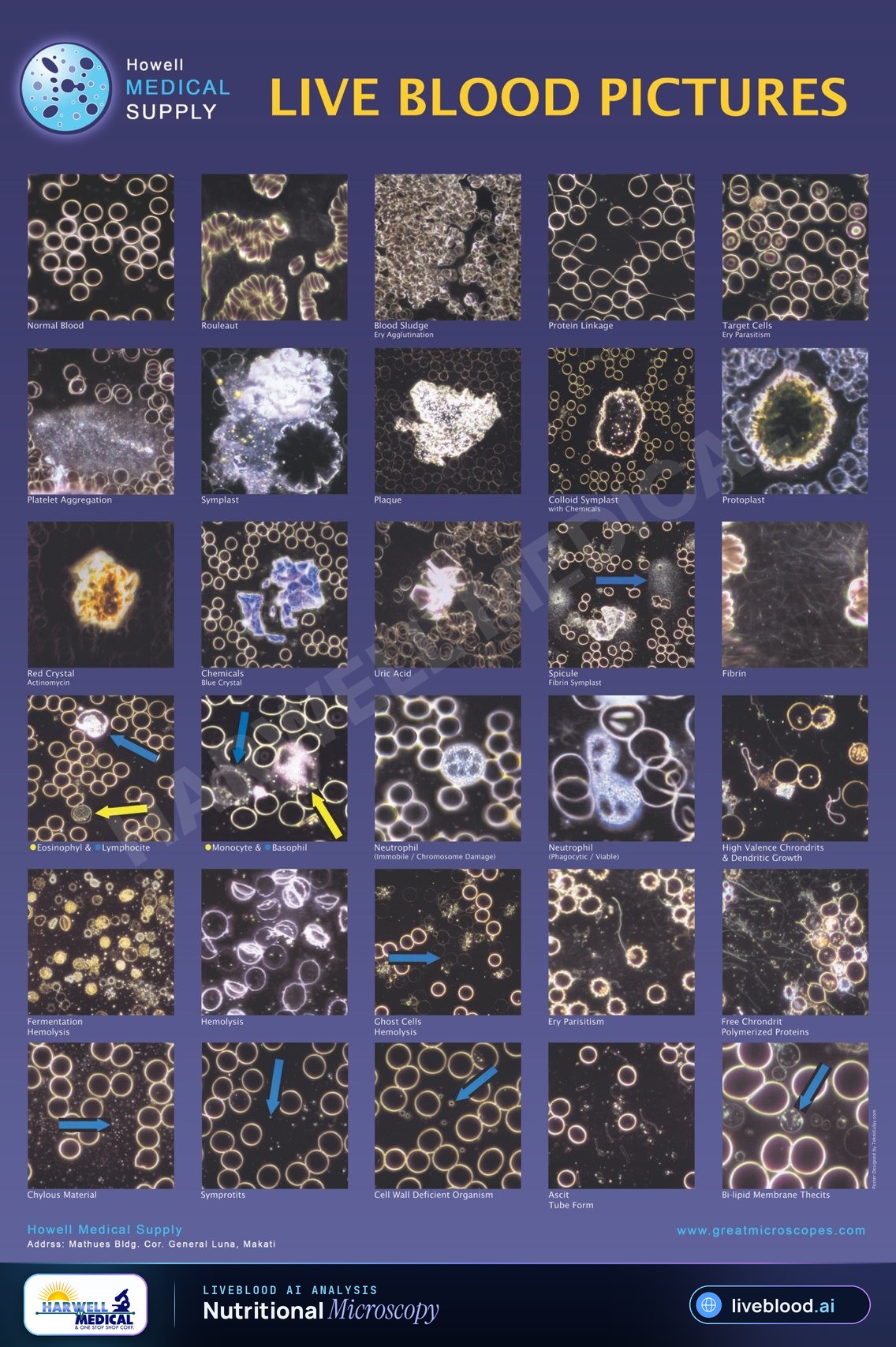
The life cycle diagram underscores the importance of blood morphology, which is the study of the shape, structure, and appearance of blood components.
Live blood analysis may allow practitioners to observe:
- Red blood cell appearance
- Platelet distribution
- Plasma characteristics
- Cell aggregation patterns
- Microscopic particulate matter
- General blood flow activity
When paired with AI technology, these observations can be documented more accurately and efficiently.
7. Why Blood Health Matters
Blood serves as the body's transportation network, carrying oxygen, nutrients, hormones, and immune cells.
Factors that influence blood health include:
Nutrition
A nutrient-rich diet supports normal cellular functions and circulation.
Hydration
Adequate water intake helps maintain healthy blood viscosity and circulation.
Stress Management
Chronic stress can impact overall biological balance and wellness.
Physical Activity
Regular exercise supports cardiovascular health and healthy circulation.
Sleep Quality
Restorative sleep is essential for cellular repair and recovery.
8. The Future of AI-Powered Blood Analysis
The integration of artificial intelligence and live blood microscopy represents an exciting development in health technology.
Platforms such as LiveBlood.ai are helping modernize blood image analysis through:
- AI-assisted pattern recognition
- Digital microscopy support
- Automated reporting systems
- Educational health insights
- Enhanced practitioner workflows
As AI technology continues to evolve, live blood analysis tools may become increasingly valuable for health education, wellness monitoring, and microscopic image documentation.
9. Conclusion
The concept of the Life Cycle of Polymorphic Microorganisms remains one of the most intriguing topics in live blood microscopy. Whether viewed from a historical, educational, or observational perspective, it highlights the complexity of the microscopic world found within blood.
With modern advancements from www.LiveBlood.ai, artificial intelligence is helping bridge traditional microscopy with next-generation digital health technologies, providing faster image evaluation, improved reporting, and a more streamlined approach to blood analysis.
10. Medical Disclaimer
This content is provided for education and general information only. Live blood images and AI-generated observations should not be used independently to diagnose, prevent, or treat a disease. Consult a qualified healthcare professional and use validated laboratory testing for medical concerns.
11. Keep reading
12. Analyze your own blood images
Upload darkfield or brightfield microscopy images and get an 8-section AI report with nutrition guidance and a 7-day meal plan.